


SHORT BIO:
Andrea Bufi is an Italian filmmaker trained in Media Design and Directing and Screenwriting in Milan and Bologna. His passion was born on the streets and in his bedroom, where he began experimenting with video cameras and editing to earn university credits, collaborating with emerging rappers on raw but highly distinctive music videos. Initially oriented towards cinema, he encountered the difficulties of a closed sector. Returning to Verona, he began collaborating with communication and marketing agencies, creating promotional, social, and corporate videos, always with a strong focus on aesthetics and visual storytelling. Today he works as a freelance videomaker, but his real ambition remains to grow in the world of cinema and, above all, to establish himself in the direction of music videos: a creative territory where image, rhythm, and music merge to give life to powerful and authentic visual stories.
FILMOGRAPHY:
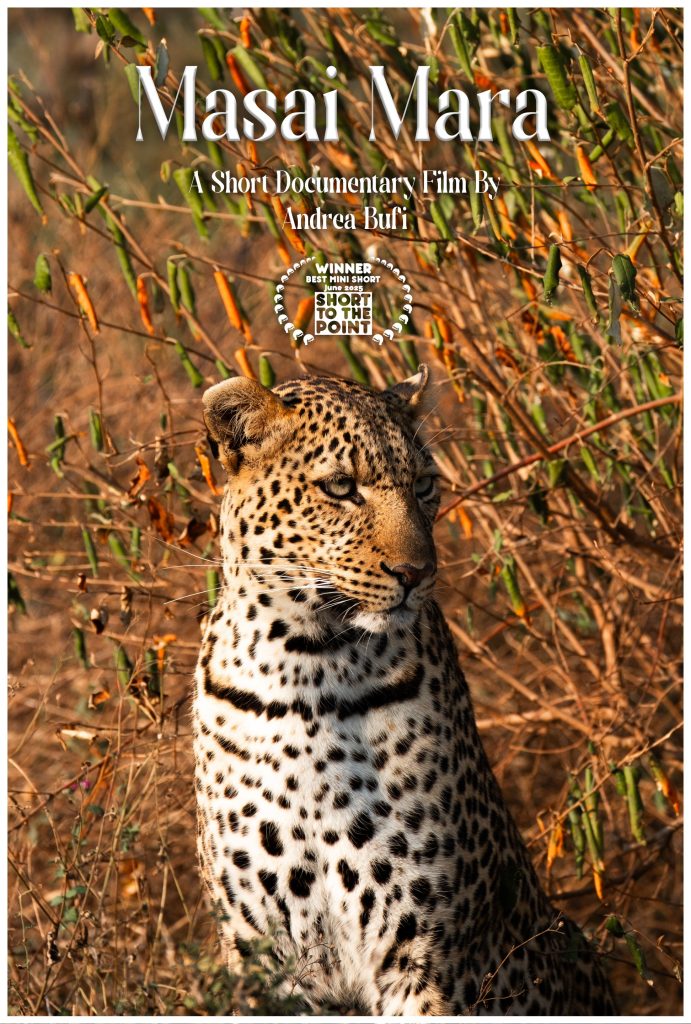
- Masai Mara (Short Documentary Film) – 2025
- Leonardo e Chiara (Matrimonio) – 2025
- Albe Dalla, Never Again – 2025
- Audi Q3 | Mini Spot – 2025
- Showreel pt.II – 2025
- Verona by Night – 2025
- Attention RMX, Albe Dalla – 2024
- Black T, HotShot – 2023
- Showreel – 2022
- Scuderia Gardesana – 2022
- Giorno di Ordinaria Follia, Michele Milani – 2022
- Aurora MMA – 2020
- H2O Tatto Studio – 2020
- Green Valley Tattoo Verona – 2020
- Jamil, On The Road – Created on 2014 reloaded on 2018
1. Was there a particular event or time that you recognized that filmmaking is your way of telling stories?
Yes, during my studies. To earn university credits, I started shooting music videos for rappers and my own personal projects. No one was really teaching me how to do it, so I decided to learn on my own. That’s when I realized that visual language was my way of telling stories unfiltered.
2. Do you think it is essential to go to a film institute in order to become a successful filmmaker?
Not quite. I studied Media Design and later Film Directing and Screenwriting, but I acquired real skills by actually shooting. School gives you insights, but you truly learn how things work on set. No course prepares you for the chaos, for managing people, or for real-world problem-solving.
3. Is it harder to get started or to keep going? What was the particular thing that you had to conquer to do either?
Getting started is hard because no one is waiting for you. But keeping it up is even harder: you have to keep going even when results don’t come right away. For me, the key was to stop seeking approval and focus on staying creatively consistent.
4. What was the most important lesson you had to learn that has had a positive effect on your film? How did that lesson happen?
That you don’t need big resources to create something meaningful. I learned to work with what I had, making the most of limitations. An experience on an improvised set taught me that spontaneity and vision matter more than technique.
5. What were the production realities from casting through editing that you had to accommodate? How did you navigate those compromises or surprises and still end up with a cohesive film?
I’ve never done a proper casting, since I’ve only made one film so far, shot in Kenya, where the main characters were animals, nature, and real environments. So no actor selection—just a lot of waiting, adapting, and sensitivity to capture what reality offers. The biggest challenge was dealing with unpredictability: changing light, animals moving, or situations appearing and disappearing in a moment. In editing, I reconstructed everything to give the footage a narrative sense, trying to maintain emotional coherence even though not everything could be planned.
6. What was the hardest artistic choice you made in the making of a film, at any stage in production?
Cutting a scene I was deeply attached to because it disrupted the rhythm. It’s always hard to let go of something you’ve created, but sometimes it’s necessary for the good of the film.
7. You are a collaborator. How have you discovered members of your team and how do you keep the relationship with them strong?
I don’t really have a fixed team. I often work alone and adapt to each situation, finding people in the moment who share my same passion and desire to prove what they can do. It’s harder, but when you find even just one person who believes in it as much as you do, then you can build something real. I don’t look for perfect professionals—I look for people who are alive, curious, and ready to step up.
8. What do audiences want? And is it the filmmaker’s role to worry about that?
I don’t have a large audience—at least not yet. But there are people who give me genuine compliments, who get emotional—and that means a lot to me. At the same time, the numbers are clear: there’s still a long road ahead. I’d love to reach a wider audience and make them feel the same emotions I feel when I create. I believe a director should stay true to themselves, but also aim to share that truth with as many people as possible.
9. What role have film festivals played in your life so far? Why are they necessary? How do you get the most out of them?
I’ve taken part in film festivals by submitting my film Masai Mara, shot during a vacation in Kenya. My goal was to prove that even in an unplanned context, with limited resources and time, you can create something powerful and authentic. But behind that project was something more personal too: I was there with a woman I cared about deeply, and in a way that film was also an attempt to imprint a feeling on screen—a moment I wished could be shared. I don’t know if she ever felt the same, but I put everything into it. That’s why, to me, festivals aren’t just showcases— they’re also places where I can truly tell who I am.
10. Do you believe that a filmmaker should be original and fresh or he/she should stick to classic but safe cinema style?
I believe style can’t be copied. Cinema has rules, that’s true—but those rules don’t need to be followed strictly, especially when love is involved. When you pour passion and emotion into a project, you create something original without having to force it or chase predefined formats. For me, originality comes from sincerity and the authenticity of what you’re telling.

